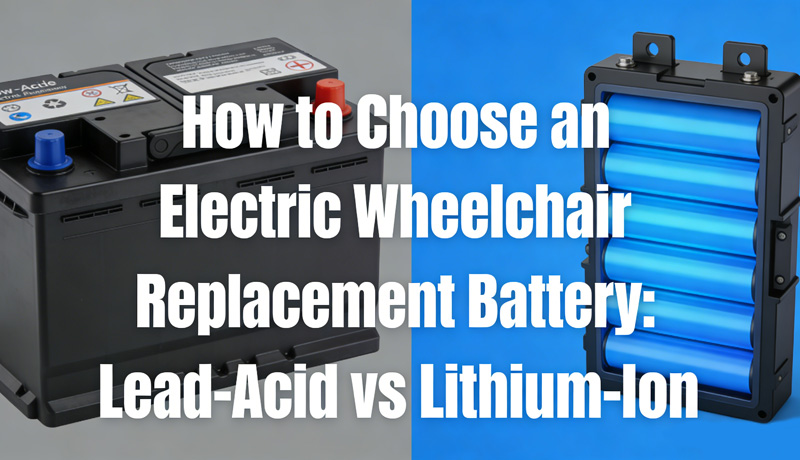
How to Choose an Electric Wheelchair Replacement Battery: Lead-Acid vs Lithium-Ion
For anyone who relies on an electric wheelchair for daily mobility, a reliable replacement battery is not just an accessory—it’s a lifeline. The right replacement battery ensures consistent performance, longer travel ranges, and peace of mind, while the wrong choice can lead to unexpected breakdowns, limited mobility, and unnecessary expenses. If your electric wheelchair’s original battery is failing (slower charging, shorter runtime, or frequent power cuts), you’re likely facing a key decision: should you replace it with a traditional lead-acid battery or upgrade to a modern lithium-ion battery?
In this comprehensive guide, we’ll break down everything you need to know to choose the best electric wheelchair replacement battery. We’ll compare lead-acid and lithium-ion batteries side by side, highlight why lithium-ion is the superior choice for most users, and walk you through a simple step-by-step process to select the perfect replacement. Whether you’re a first-time battery buyer or looking to upgrade, this guide is designed to be easy to understand, with clear explanations and practical tips—optimized for Google SEO to help you find the information you need quickly.
Why Choosing the Right Electric Wheelchair Replacement Battery Matters
Your electric wheelchair’s battery is its power source, and a poor replacement can ruin your mobility and safety. Here’s why getting this decision right is critical:
-
Mobility Independence: A reliable battery ensures you can go about your daily activities—grocery shopping, doctor’s appointments, or spending time with family—without worrying about sudden power loss.
-
Safety: Low-quality or mismatched batteries can overheat, leak, or even catch fire. Choosing a high-quality, compatible battery reduces these risks.
-
Cost Savings: While some batteries have a higher upfront cost, they last longer and require less maintenance, saving you money in the long run.
-
Performance: The right battery will match your wheelchair’s power needs, providing smooth acceleration, consistent speed, and enough runtime for your daily use.
The first step in choosing a replacement battery is understanding the two main types available: lead-acid (SLA) and lithium-ion. Let’s compare them in detail to help you make an informed choice.
Electric Wheelchair Replacement Battery: Lead-Acid vs Lithium-Ion
Lead-acid batteries have been the traditional choice for electric wheelchairs for decades, while lithium-ion batteries are a newer, more advanced option. Below is a side-by-side comparison of their key features, pros, and cons—with a focus on what matters most to wheelchair users.
1. Lead-Acid (SLA) Electric Wheelchair Batteries
Lead-acid (also called sealed lead-acid, SLA) batteries are the most common traditional replacement option. They are affordable upfront and widely available, making them a popular choice for users on a tight budget. Here’s what you need to know:
Key Features
-
Weight: Heavy (typically 16–23kg per 24V battery)—a major downside for anyone who needs to transport their wheelchair or lift the battery.
-
Runtime & Capacity: Moderate capacity (35–80Ah), but runtime decreases over time (especially in cold weather).
-
Charging Time: Slow (8–12 hours for a full charge), which means you need to plan ahead to keep your battery charged.
-
Lifespan: Short (1–2 years, or 300–400 charge cycles), meaning you’ll need to replace them more frequently.
-
Maintenance: Requires occasional checks for leakage or corrosion (even sealed models can develop issues).
-
Safety: Prone to sulfation (damage from being left uncharged) and can leak acid if damaged.
Pros of Lead-Acid Batteries
-
Low upfront cost (cheaper than lithium-ion by 50–70%).
-
Widely available at local stores and online.
-
Simple technology—compatible with most older electric wheelchairs.
Cons of Lead-Acid Batteries
-
Heavy weight makes transportation and lifting difficult (a major inconvenience for users or caregivers).
-
Short lifespan means more frequent replacements (higher long-term cost).
-
Slow charging limits flexibility (you can’t quickly top up the battery before a trip).
-
Prone to damage if not charged regularly (sulfation reduces capacity permanently).
-
Less eco-friendly (contains lead and acid, which are harmful to the environment if not recycled properly).
2. Lithium-Ion Electric Wheelchair Batteries (Our Top Recommendation)
Lithium-ion batteries are the modern, premium choice for electric wheelchair replacement batteries. While they have a higher upfront cost, their advantages far outweigh the price tag for most users. Here’s why they’re our top recommendation:
Key Features
-
Weight: Lightweight (50–70% lighter than lead-acid)—a game-changer for portability. Most lithium-ion batteries weigh 5–10kg for a 24V model, making them easy to lift and transport.
-
Runtime & Capacity: High energy density means longer runtime (even with a smaller battery). A 24V 52Ah lithium-ion battery provides the same or better runtime than a 24V 80Ah lead-acid battery.
-
Charging Time: Fast (4–6 hours for a full charge)—you can top up the battery quickly before a trip, no need to plan ahead.
-
Lifespan: Long (3–5 years, or 1000–1500 charge cycles)—lasts 2–3 times longer than lead-acid batteries, saving you money long-term.
-
Maintenance: Completely maintenance-free—no need to check for leakage or corrosion, and no sulfation issues.
-
Safety: Built-in protection against overcharge, over-discharge, and short-circuit (most come with a BMS, or Battery Management System).
Pros of Lithium-Ion Batteries
-
Lightweight design makes transportation and lifting easy (ideal for users who travel or need to store their wheelchair).
-
Long lifespan reduces replacement frequency (lower long-term cost despite higher upfront price).
-
Fast charging provides flexibility and convenience.
-
Maintenance-free—no extra work to keep the battery in good condition.
-
Consistent performance (voltage stays stable throughout use, so no loss of power mid-trip).
-
Eco-friendly (no lead or acid, easier to recycle).
-
No “memory effect” (you can charge it at any time without reducing capacity).
Cons of Lithium-Ion Batteries
Why We Recommend Lithium-Ion for Most Electric Wheelchair Users
While lead-acid batteries are cheaper upfront, lithium-ion batteries are the better choice for 90% of electric wheelchair users—here’s why:
-
Portability: The lightweight design is a game-changer for anyone who needs to lift their battery, transport their wheelchair in a car, or travel. Caregivers will also appreciate the reduced weight when helping with the wheelchair.
-
Long-Term Cost Savings: A lithium-ion battery lasts 3–5 years, while a lead-acid battery lasts 1–2 years. Over 5 years, you’ll spend less on lithium-ion (1 replacement vs. 2–3 lead-acid replacements).
-
Convenience: Fast charging and maintenance-free operation mean less hassle. You can charge the battery overnight or top it up quickly before a trip, and you never have to worry about checking for leaks or corrosion.
-
Performance: Lithium-ion batteries provide consistent power throughout their charge, so you won’t experience a drop in speed or performance as the battery drains. This is especially important for users who travel long distances or use their wheelchair on rough terrain.
-
Safety: The built-in BMS protects against common battery issues (overcharge, short-circuit), making lithium-ion batteries safer than lead-acid, which can leak or overheat if not maintained.
The only time we recommend lead-acid is if you’re on an extremely tight budget and don’t need portability (e.g., your wheelchair stays in one place most of the time).
Step-by-Step Guide to Choosing the Right Electric Wheelchair Replacement Battery
Now that you know why lithium-ion is the best choice for most users, follow these simple steps to select the perfect replacement battery for your electric wheelchair. This process ensures you get a battery that’s compatible, reliable, and tailored to your needs.
Step 1: Check Your Wheelchair’s Specifications
The first and most important step is to check your electric wheelchair’s user manual or the original battery label for these key details:
-
Voltage: Most electric wheelchairs use a 24V system (two 12V batteries in series), but some lightweight models use 12V or heavy-duty models use 36V/48V. Never use a battery with the wrong voltage—it will damage your wheelchair’s motor and electronics.
-
Capacity (Ah): Capacity measures how much energy the battery can store (higher Ah = longer runtime). Common capacities are 35–80Ah. Choose based on your daily use: 35–50Ah for 5–10 miles/day, 50Ah+ for 15+ miles/day.
-
Terminal Type: The metal connectors (F1, F2, or Nut & Bolt) must match your wheelchair’s connectors. Check the original battery to avoid compatibility issues.
-
Physical Dimensions: Measure the battery compartment to ensure the replacement battery fits (too large = won’t fit; too small = moves around and causes damage).
Step 2: Choose Lithium-Ion (Our Recommendation)
As we’ve explained, lithium-ion is the best choice for most users. Look for a lithium-ion battery that matches your wheelchair’s voltage, capacity, and terminal type. We recommend reputable brands like Jiangsu Yongchang New Energy, Tianneng Group, or Xingheng Power—these brands meet strict safety standards (GB31241-2014, CE, UL) and offer reliable performance.
Step 3: Consider Your Usage Habits
Tailor the battery capacity to your daily needs:
-
Light Usage (5–10 miles/day, flat terrain): 24V 20–30Ah lithium-ion battery.
-
Moderate Usage (10–15 miles/day, mixed terrain): 24V 30–50Ah lithium-ion battery.
-
Heavy Usage (15+ miles/day, rough terrain): 24V 50Ah+ lithium-ion battery (or 36V/48V for heavy-duty wheelchairs).
Step 4: Avoid Generic Batteries
Generic or unbranded batteries may be cheaper, but they often have inconsistent quality, shorter lifespans, and pose safety risks (overheating, leakage). Stick to reputable brands to ensure safety and performance.
Tips for Maintaining Your Electric Wheelchair Replacement Battery (Lithium-Ion)
To extend the lifespan of your lithium-ion replacement battery, follow these simple maintenance tips:
-
Charge the battery after every use (even if it’s not fully depleted) to avoid deep discharge.
-
Use the charger provided by the battery manufacturer (incompatible chargers damage the battery).
-
Store the battery in a cool, dry place (15–24°C) away from direct sunlight or extreme temperatures.
-
Avoid charging the battery to 100% or discharging it to 0% regularly (keep it between 20–80% for longer lifespan).
-
Check the battery terminals monthly for loose connections (tighten if needed).
FAQs About Electric Wheelchair Replacement Batteries
Q1: Can I replace a lead-acid battery with a lithium-ion battery in my electric wheelchair?
A: Yes! Most electric wheelchairs are compatible with lithium-ion batteries, as long as you choose the correct voltage, capacity, and terminal type. Lithium-ion batteries are lighter and more efficient, so they’re a great upgrade from lead-acid.
Q2: How long does a lithium-ion electric wheelchair battery last?
A: A high-quality lithium-ion battery lasts 3–5 years (1000–1500 charge cycles), while a lead-acid battery lasts 1–2 years. Proper maintenance can extend the lifespan even further.
Q3: Is a lithium-ion battery worth the higher upfront cost?
A: Yes! While lithium-ion is more expensive upfront, it lasts 2–3 times longer than lead-acid, so you’ll save money in the long run. Plus, the lightweight design and fast charging make it much more convenient.
Q4: What charger should I use for a lithium-ion electric wheelchair battery?
A: Use a dedicated lithium-ion charger that matches your battery’s voltage (e.g., 24V charger for a 24V battery). Do not use a lead-acid charger—this will damage the lithium-ion battery.
Q5: How do I know when it’s time to replace my electric wheelchair battery?
A: Signs you need a replacement: significantly shorter runtime (e.g., from 15 miles to 5 miles per charge), longer charging time, bulging battery case, leakage, or frequent power cuts.
Final Thoughts
Choosing the right electric wheelchair replacement battery is critical for your mobility, safety, and peace of mind. While lead-acid batteries are cheaper upfront, lithium-ion batteries are the superior choice for most users—offering lightweight portability, long lifespan, fast charging, and maintenance-free operation. By following our step-by-step guide, you can select a compatible, high-quality lithium-ion battery that meets your needs and lasts for years.
Remember: invest in a reputable brand, match the battery to your wheelchair’s specifications, and follow proper maintenance tips to get the most out of your replacement battery. With the right battery, you can enjoy reliable mobility and independence for years to come.
Contact Us for Your Electric Wheelchair Replacement Battery Needs
Not sure which lithium-ion electric wheelchair replacement battery is right for your model? Or do you need a custom battery solution tailored to your specific needs? Our team of experts is here to help.
We specialize in high-quality lithium-ion electric wheelchair batteries, including compatible models for all major wheelchair brands. Whether you need a standard 24V battery, a high-capacity 50Ah+ option, or a custom-sized battery, we’ve got you covered. All our batteries meet strict safety standards (CE, UL, GB31241-2014) and come with a warranty for your peace of mind.
Reach out to us today via email, phone, or our online contact form—we’ll answer your questions, help you select the perfect replacement battery, and provide professional advice to ensure you get the best performance and lifespan from your battery. Let us help you maintain your mobility and independence with reliable, high-performance electric wheelchair replacement batteries.